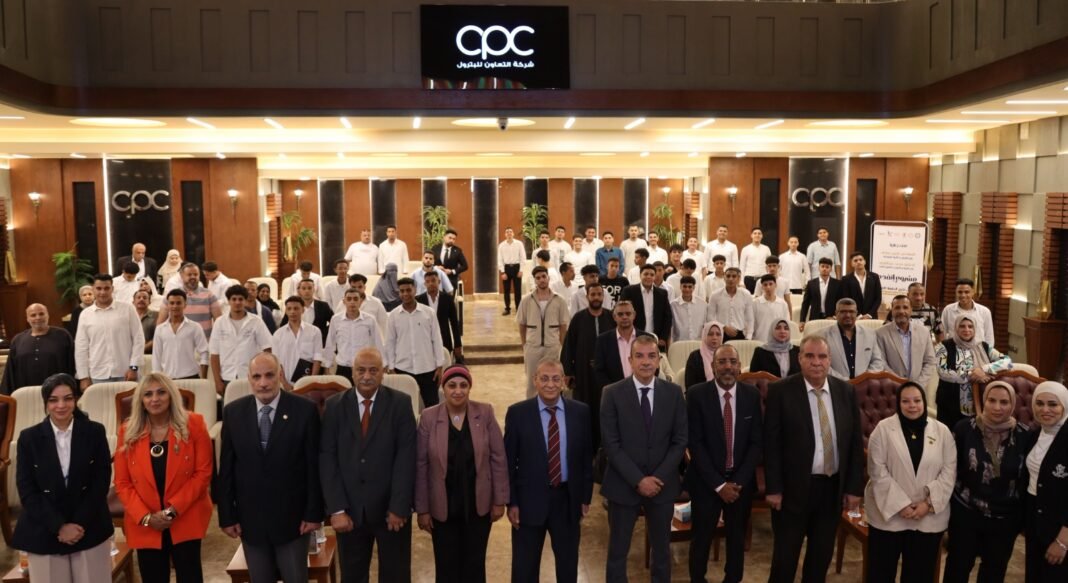

Transitioning from classrooms to operational sites, and from theoretical knowledge to practical skills, the Cooperative of Petroleum (CPC), in partnership with MIDTAP and EPROM, celebrated the graduation of the first batch of the “Atqadam” dual education and training project. The batch comprises 110 students across five technical specializations, marking a significant step that reflects the petroleum and mineral resources sector’s commitment to corporate social responsibility and human capital development. The graduation ceremony was attended by prominent figures from the Ministries of Petroleum and Mineral Resources, and Education and Technical Education, alongside petroleum sector leaders. Leading the attendees were Accountant Mostafa El-Sayed Ahmed, Chairman of Copetrole; Eng. Hossam Asaad, Chairman and Managing Director of EPROM; Eng. Hassanein Mohamed Hassanein, Chairman and Managing Director of MIDTAP; Ms. Eman El-Deeb, Assistant CEO for CSR at the Egyptian General Petroleum Corporation (EGPC); Ms. Nouran Mohamed Abdel Azim, Department Manager at the Central Administration for CSR at the Ministry of Petroleum; and Dr. Rasha Fathy, General Manager of the General Administration for the Technical Education Development Center.
The “Atqadam” project, the culmination of three years of dual education, was launched under a cooperation protocol between the Ministry of Education and Technical Education and Copetrole. It aims to support the development of technical education and bridge the gap between educational outcomes and labor market needs by combining theoretical studies with hands-on training in an actual work environment. Over the course of three years, students received intensive field training under the supervision of Copetrole’s engineers and technicians. During this period, they acquired essential technical and practical expertise, alongside strong discipline and occupational health and safety practices. The ceremony featured the honoring of the first batch of graduates and showcased the “Atqadam” experience as a successful model of integrating education and training with market demands to prepare highly skilled technical cadres. Ultimately, this initiative underscores Copetrole’s role in transforming social responsibility into a sustainable impact by investing in youth, developing their technical capabilities, and fostering strategic partnerships between educational institutions and the petroleum sector to support the future of the industry.