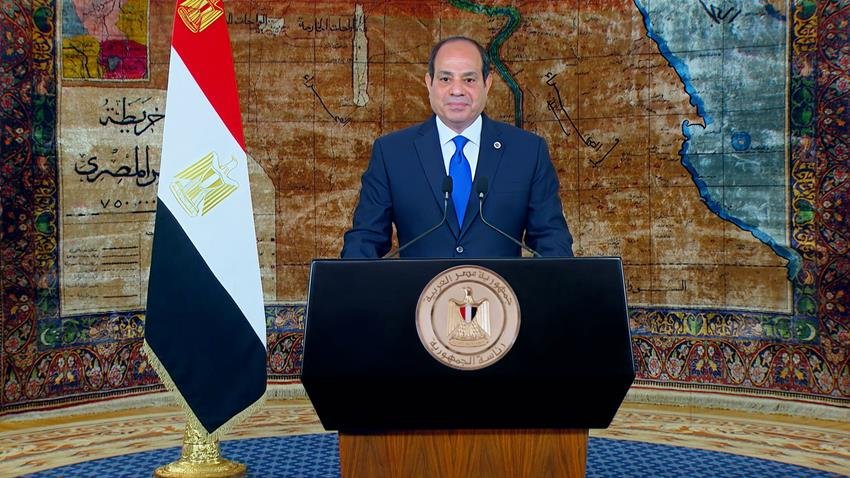


Egyptian President Abdel Fattah al-Sisi emphasized that any bet on Egypt accepting a “fait accompli” or compromising its water security, is a losing bet.
He noted that Egypt extends its hand to its neighbors for cooperation rooted in international law, good neighborliness, and the commitment to cause no harm.
During his speech at the opening of the Ninth edition of Cairo Water Week on Sunday, Sisi said that Egypt faces a unique water challenge due to its geographic nature and its primary reliance on the Nile River, which is shared among the basin states and provides Egypt with more than 98 percent of its renewable water resources.
Amid a growing population, increasing water and food needs, and the mounting impacts of climate change, Sisi noted that Egypt continues its efforts to enhance water-use efficiency, develop its water resources, and maximize their utilization—in tandem with supporting cooperation among the basin nations to achieve water security and sustainable development for all our peoples.
President Sisi said that Egypt respects and supports the right of all Nile Basin states to development; “We translated this stance into concrete action by cooperating with our brothers on proposed projects within investment programs across the southern Nile Basin countries in the fields of energy, agriculture, and irrigation.”
He added that this experience has proven that prior notification, the exchange of studies, and consultation are practical tools that facilitate the mobilization of project financing, build trust, and safeguard the interests of all—rather than serving as a means to disrupt development or impose guardianship over any nation.
Egypt supports nations in right to development – within reason
Sisi stressed that every nation has the right to development and to benefit from its natural resources, provided this right is exercised responsibly, without harming other states or compromising their water security.
The presence of a river’s headwaters within the territory of a single state does not grant it the right of unilateral control over a resource shared by multiple peoples.
The former Assistant Foreign Minister, Ambassador Mohamed Hegazy, said that the president’s remarks underscored that protecting the interests of its people is a national responsibility that allows for no compromise, and that the president’s words send a clear message to all parties: respecting Egypt’s water interests is not a political choice subject to negotiation.
An expert on African affairs, Ramy Zohdy, affirmed that Egypt remains the most dynamic and influential actor in the region.
Zohdy added that Cairo has consistently maintained—past and present—that it does not oppose Ethiopia’s right to development or the utilization of its natural resources; however, it rejects the notion that this right should serve as a justification for unilateral control over a shared international river.
Edited translation from Al-Masry Al-Youm