
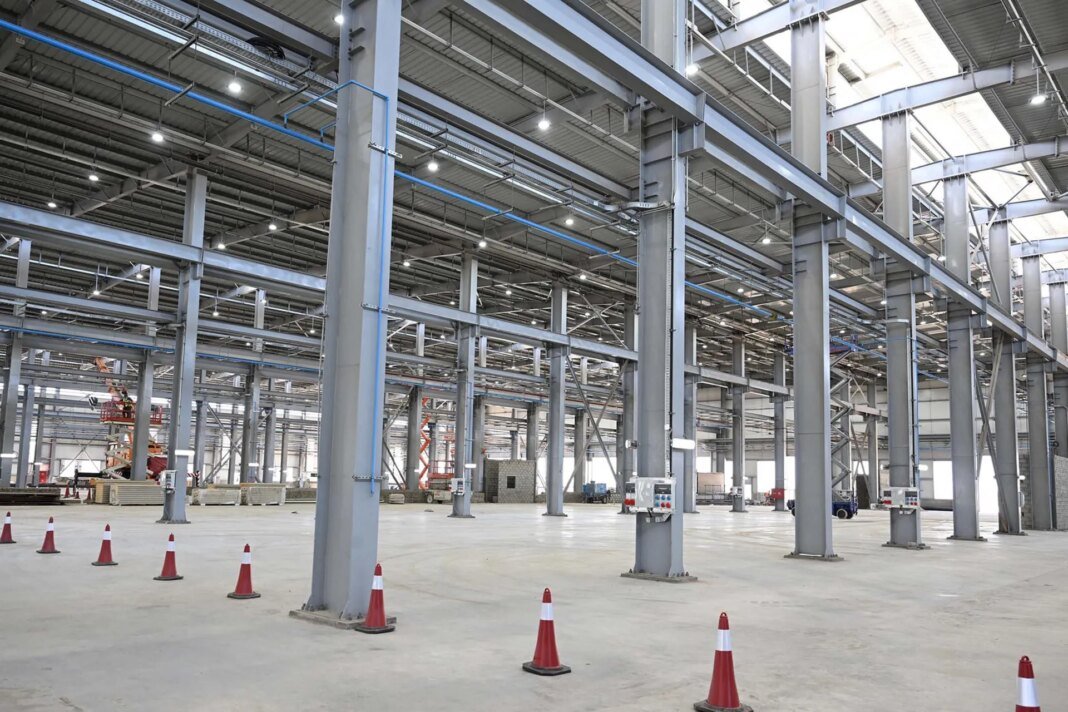

Manufacturers running behind schedule on projects with active building permits will get up to 18 additional months to complete construction and secure operational licenses under a new Industry Ministry relief package, according to an executive decision seen by EnterpriseAM. The length of the extension and the corresponding relief from late-payment penalties will depend on a project’s physical completion rate, giving developers with real progress breathing room to finalize their factories without penalizing the state treasury.
The new framework divides projects into three tiers:
- Tier 1 (At least 75% complete): Receives up to six additional months to finish construction, secure an operating license, and obtain industrial registration, accompanied by a 100% waiver of late-payment penalties;
- Tier 2 (50% to 75% complete): Receives up to 12 additional months, with late-payment penalties waived for the first six months only;
- Tier 3 (Less than 50% complete): Receives up to 18 additional months, with late-payment penalties waived for the first six months only.
BUT- Standard administrative fees remain due in all three tiers, and the ministry is keeping a short leash on persistent defaulters.
One last chance: Projects that have already exhausted extensions under earlier decisions but still failed to complete construction will receive a final, non-negotiable three-month grace window. If an investor fails to finalize the project by the end of this period, the Industrial Development Authority (IDA) will immediately cancel the allocation and reclaim the land.
No paper-flipping: Investors are barred from selling, assigning, or leasing allocated industrial land prior to commencing actual operations. Any future disposal of a plot requires the developer to have paid the full land price, settled all outstanding dues, secured both an operating license and industrial registration, and initiated active factory production. However, the new rules will permit developers to switch from one industrial activity to another within industrial zones and industrial-developer areas, subject to an IDA-approved feasibility study demonstrating the new activity’s suitability for the plot’s location.
IN CONTEXT- The ministry has been pairing greater flexibility for manufacturers with a tougher stance on inactive and speculative land-holdings. The IDA tightened its crackdown on industrial land hoarding last year, including reclaiming plots from investors that failed to demonstrate progress. The state has also repeatedly eased the cost of accessing land — from installment terms and construction grace periods introduced in 2023 to the lease-to-own system launched earlier this week — which lets manufacturers preserve capital for construction, equipment, and operations.
OUR TAKE- The package targets one of the biggest constraints facing manufacturers: industrial land that has been allocated but has yet to reach operation. Longer implementation periods, lower penalties, and the option to change activity could help viable projects reach production, while the final three-month deadline and restrictions on disposing of unfinished plots keep pressure on investors sitting on land without operating. Getting more allocated plots into production will be essential to the government’s plan to raise the industrial sector’s contribution to GDP to 20% by 2030.