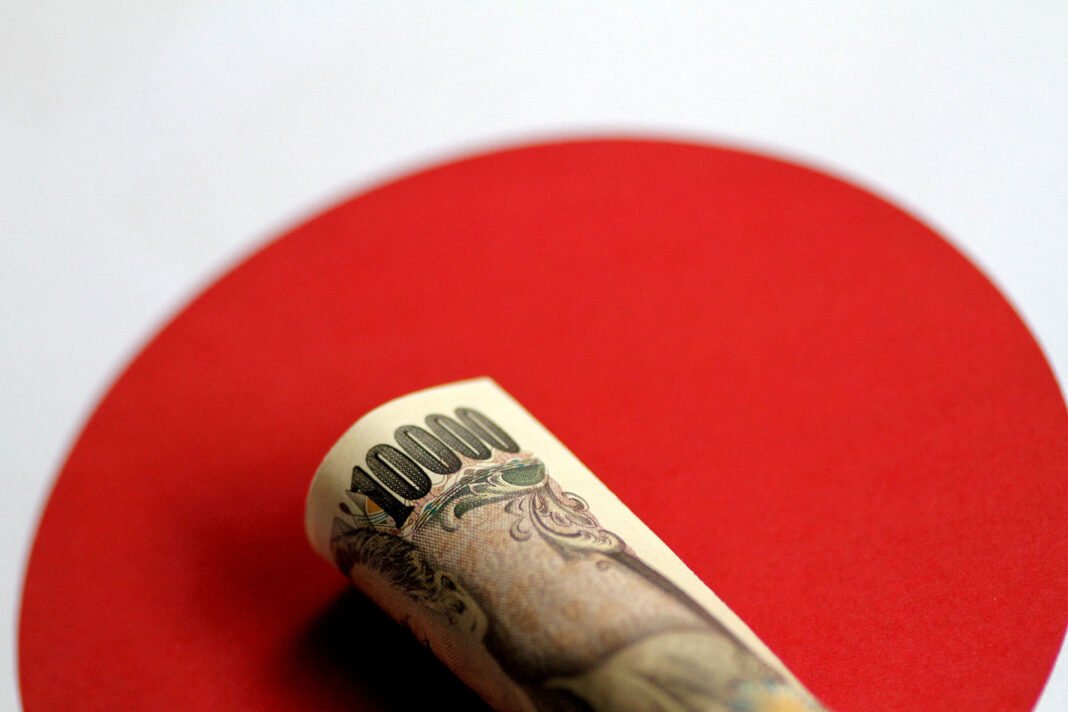


Tokyo and Washington are jointly stepping in to arrest the JPY’s slide to 40-year lows, but the intervention is merely buying time for a fix that currency purchases alone cannot deliver: a Bank of Japan (BOJ) rate hike, now penciled in for as early as September. Finance Minister Satsuki Katayama is expected to confirm the joint action today, according to two Japanese officials cited by Reuters, marking the first such coordinated move since 2011.
The mechanics of the rescue: Japan bought JPY and sold USD in New York hours on Thursday, with BOJ data suggesting a massive outlay of up to USD 58.97 bn, though confirmed figures won’t be out for another month. Tokyo intervened again in New York hours on Friday. The US side was executed quietly: the Treasury told banks on Friday to stand ready, and the New York Fed sold EUR for JPY on the Treasury’s behalf through Goldman Sachs and Morgan Stanley, according to the Financial Times, but no amount was disclosed.
A highly visible to-do list: While the exact US spend wasn’t disclosed, Treasury Secretary Scott Bessent accidentally flashed his notepad during a televised Camp David cabinet meeting on Friday. The top item? “To Do: Buy Japanese Yen (JPY) USD 5-10 bn.”
Does this actually work? Japan has intervened alongside the US or other G7 partners five times since 1985 and gone it alone eight times, according to an analysis by currency strategist Brent Donnelly of Spectra Markets, separately cited by Reuters. His analysis shows most of the joint interventions coincided with an actual turn in the USD/JPY trend. However, Nomura currency strategist Dominic Bunning remains skeptical, calling the current move “tacit support more so than explicit coordinated intervention,” rather than 2011-style coordination.
Why September matters more than today: The BOJ held its rate at 1% on Friday but warned for the first time that underlying inflation could exceed its target, marking the clearest signal yet that a hike is coming as soon as next month. Pundits think intervention won’t help the JPY in the longer term unless the BOJ actually follows through, and unless US rates move lower too.
South Korea is also playing defense: Seoul sold USD alongside Japan on Thursday, briefly lifting the KRW 2% to a nine-month high. But the KRW’s broader 7.5% surge this month is coming from a different source entirely: Korean companies repatriating USDs, not intervention.
OUR TAKE- Washington is helping prop up the JPY because the alternative isn’t appealing.
Japan is one of the largest foreign holders of US government debt. If Tokyo is forced to sell down its Treasury holdings to fund a unilateral JPY rescue, it could trigger a selloff in US debt and cause an unwelcome spike in US yields. Japan’s Finance Ministry posted on X over the weekend that it has “a broad range of tools,” including access to the Fed’s Foreign and International Monetary Authorities (FIMA) Repo Facility, which lets it raise USD liquidity without selling its Treasury holdings outright.
MARKETS THIS MORNING-
Asian markets kicked off the month in the red, led by a sharp decline in South Korea’s Kospi, which dropped 4.5% in early trading, capping off a turbulent July during which it slumped 22%. The drop-off coincided with a sell-off among heavyweight chipmakers, driven by mounting headwinds that include rapid advancements in China’s AI and semiconductor sectors. Japan’s Nikkei wasn’t too far behind, slipping 2.2%.
|
EGX30 |
54,286 |
+1.6% (YTD: +29.8%) |
|
|
USD (CBE) |
Buy 50.35 |
Sell 50.48 |
|
|
USD (CIB) |
Buy 50.30 |
Sell 50.40 |
|
|
Interest rates (CBE) |
19.00% deposit |
20.00% lending |
|
|
Tadawul |
10,706 |
+1.1% (YTD: +2.1%) |
|
|
ADX |
9,915 |
+0.4% (YTD: -0.8%) |
|
|
DFM |
5,796 |
+0.1% (YTD: -4.2%) |
|
|
S&P 500 |
7,490 |
+0.7% (YTD: +9.4%) |
|
|
FTSE 100 |
10,868 |
-0.3% (YTD: +9.4%) |
|
|
Euro Stoxx 50 |
6,358 |
+0.2% (YTD: +9.7%) |
|
|
Brent crude |
USD 83.64 |
-4.9% |
|
|
Natural gas (Nymex) |
USD 2.73 |
-0.6% |
|
|
Gold |
USD 4,126 |
+0.5% |
|
|
BTC |
USD 63,421 |
+1.0% (YTD: -27.6%) |
|
|
S&P Egypt Sovereign Bond Index |
1,087 |
+0.1% (YTD: +9.5%) |
|
|
S&P MENA bond & sukuk |
149.83 |
0.0% (YTD: -1.4%) |
|
|
VIX (Volatility Index) |
15.99 |
-6.4% (YTD: +7.0%) |
THE CLOSING BELL-
The EGX30 rose 1.6% at yesterday’s close on turnover of EGP 10.4 bn (8.7% above the 90-day average). Regional investors were the sole net sellers. The index is up 29.8% YTD.
In the green: Telecom Egypt (+9.2%), AMOC (+7.5%), and Kima (+6.2%).
In the red: Palm Hills Developments (-0.1%).